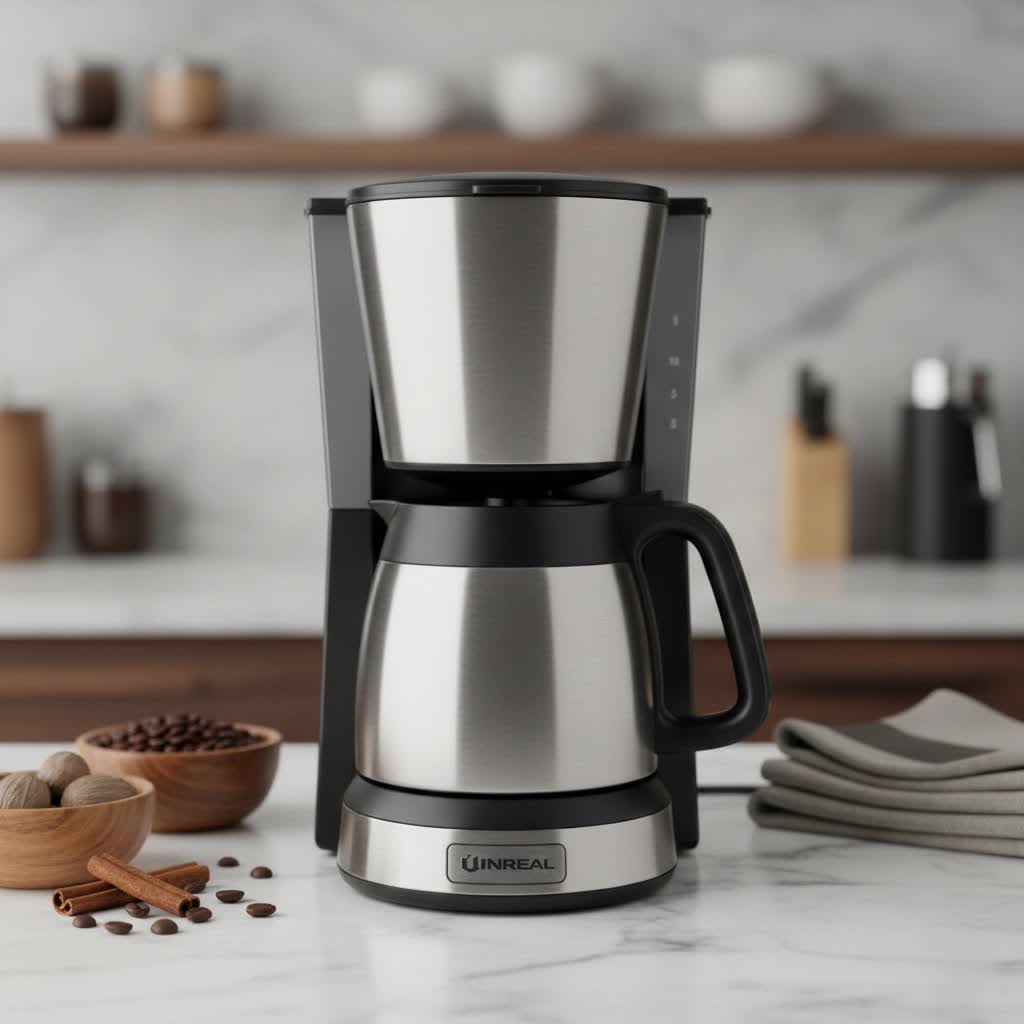
In the dynamic world of commercial kitchens and bustling office spaces, a reliable coffee maker isn’t just a convenience; it’s a cornerstone of daily operations. For decades, the Bunn Commercial Coffee Maker has been synonymous with robust performance, speed, and consistent quality, earning its place as a trusted workhorse in countless establishments. If you’re seeking a brewing solution that can keep pace with high demand and deliver exceptional coffee cup after cup, understanding the intricacies of Bunn’s commercial lineup is essential. This comprehensive guide will navigate you through everything you need to know, from their storied history to selecting, operating, and maintaining the perfect Bunn model for your specific needs.
An Overview of Bunn Commercial Coffee Makers
What exactly defines a Bunn commercial coffee maker, and why have they maintained such a strong presence in the foodservice industry? These machines are engineered for environments where speed, durability, and capacity are paramount. Unlike their residential counterparts, commercial models are built to withstand continuous use, often brewing gallons of coffee per hour.
The story of Bunn-O-Matic Corporation began in 1957, rooted in five generations of family entrepreneurship. Since then, Bunn has evolved into a global leader in beverage dispensing equipment. Their early innovations, particularly the introduction of the first pour-over coffee brewer, revolutionized how businesses served coffee by significantly reducing brew times and increasing efficiency. This legacy of innovation and unwavering commitment to quality continues to drive their product development today.
Bunn offers a diverse range of commercial coffee makers, each designed to meet varying demands and operational setups. The most common types include:
- Pour-Over Brewers: These machines are portable and don’t require a plumbing connection. Users manually add water for each brew cycle. They are ideal for settings where water access is limited or portability is crucial, such as catering events or smaller offices.
- Automatic Brewers: Designed for higher volume and consistency, automatic Bunn coffee makers connect directly to a water line. This ensures a continuous supply of water and eliminates the need for manual refills, perfect for busy restaurants, cafes, or large offices.
- Satellite Brewers: These systems brew coffee directly into insulated satellite servers, which can then be transported to different serving stations while maintaining optimal temperature. They are excellent for banquet halls, large corporate events, or self-service areas.
- High-Volume Brewers: For establishments with extraordinary coffee demands, Bunn offers brewers capable of producing many gallons of coffee per hour, often featuring multiple brewing heads and larger reservoirs.
Factors to Consider When Buying a Bunn Commercial Coffee Maker (Buying Guide)
Choosing the right Bunn commercial coffee maker involves carefully evaluating your specific operational needs. Several key factors will influence which model is the best fit for your business.
Type of Coffee Maker
|
Our Picks for the Best Coffee Maker in 2026
As an Amazon Associate I earn from qualifying purchases.
|
||
| Num | Product | Action |
|---|---|---|
| 1 | Hamilton Beach 2-Way Programmable Coffee Maker, 12 Cup Glass Carafe And Single Serve Coffee Maker, White with Stainless Steel Accents, 49933 |

|
| 2 | 500ml Coffee Decanter Glass Drip Coffee Maker with Reusable Stainless Steel Filter and Grip for Home or Office |
|
| 3 | Keurig K-Classic Single Serve K-Cup Pod Coffee Maker, Rhubarb |
|
| 4 | Hamilton Beach 2-Way Programmable Coffee Maker, 12 Cup Glass Carafe And Single Serve Coffee Maker, Black with Stainless Steel Accents, 49980RG |
|
| 5 | Ninja 12-Cup Programmable Coffee Brewer, 2 Brew Styles, Adjustable Warm Plate, 60oz Water Reservoir, Delay Brew - Black/Stainless Steel |
|
| 6 | BLACK+DECKER CM1160W-1 CM1160W 12-Cup Programmable Coffeemaker, White/Stainless Steel |
|
| 7 | ALPHA LIVING 100 Cups Electric Coffee Urn – Stainless Steel Large Capacity Electric Kettle Percolator Coffee Pot – Ideal Hot Beverage Dispenser for Catering, Hotels, Restaurants –Leak-Proof Tap |
|
| 8 | BLACK+DECKER 12-Cup Digital Coffee Maker, Programmable, Washable Basket Filter, Sneak-A-Cup, Auto Brew, Water Window, Keep Hot Plate, Black |
|
| 9 | Keurig K-Classic Single Serve K-Cup Pod Coffee Maker, with 3 Brew Sizes, 48oz Removable Reservoir, Black |
|
| 10 | Keurig K-Express Single Serve Coffee Maker – Strong Brew Option, 42oz Reservoir, Sleek Design for Holiday Hosting & Gifting, Black |
|
The decision between a pour-over, automatic, or satellite brewer depends heavily on your facility’s infrastructure and usage patterns.
- Pour-over brewers, such as the popular Bunn VPR series, offer flexibility as they require no plumbing. Their portability makes them suitable for diverse locations or catering. However, they demand manual refilling for each batch, which might not be ideal for constant, high-volume demand.
- Automatic brewers, like the Bunn Axiom series, connect directly to a water line, providing continuous brewing capabilities without manual water addition. This is essential for cafes, diners, and large offices that require a steady, uninterrupted supply of coffee throughout the day.
- Satellite brewers offer the advantage of brewing large quantities into portable, insulated servers, allowing you to easily distribute coffee to various serving areas while preserving its freshness and temperature. This is perfect for conference centers or large-scale events.
Capacity and Output
How much coffee do you need to brew, and how quickly? This is a critical question for any commercial setting.
Bunn commercial coffee makers are rated by their brewing capacity, often measured in cups or gallons per hour. For instance, many standard models can brew around 3.8 gallons (approximately 60-70 cups) per hour. High-volume models can exceed this significantly. Consider your peak demand periods and average daily consumption. A small office might only need a brewer capable of 1-2 gallons per hour, while a busy diner could require a machine producing 5-10 gallons or more. Overestimating your needs slightly can prevent slowdowns during busy times, but underestimating can lead to customer dissatisfaction.
Key Features
Modern Bunn commercial coffee makers come equipped with a range of features designed to enhance efficiency, quality, and user experience.
- Warmers: Many models include upper and lower warmers to keep multiple decanters of coffee hot. This is crucial for maintaining serving temperature without scorching the coffee.
- Digital Controls: Advanced models often feature digital displays for precise control over brew cycles, water temperature, and brew strength, allowing for customization and consistent results.
- Hot Water Spigot: A convenient feature, especially in cafes or restaurants, providing instant hot water for tea, hot chocolate, or other hot beverages.
- Brew Strength Control: Some brewers allow you to adjust the coffee’s strength, catering to different preferences or types of beans.
- Energy-Saving Modes: Look for features like automatic shut-off or energy-saver modes to reduce power consumption during off-peak hours.
- SplashGard® Funnel: This Bunn innovation helps deflect hot liquids away from the hand, enhancing user safety during operation.
- Water Filtration: While often an external accessory, some Bunn systems are designed to integrate seamlessly with water filtration, improving coffee taste and machine longevity by reducing scale buildup.
Brand Reputation and Price
Bunn has built a strong reputation for durability and performance over decades. While the initial investment for a commercial Bunn coffee maker might be higher than a consumer-grade machine, their longevity and reliability often translate to a lower total cost of ownership.
Prices vary widely based on capacity, features, and model complexity. Basic pour-over models might start in the mid-hundreds, while high-capacity, automatic, programmable systems can run into several thousands of dollars. Evaluate your budget against the features and output required, considering the long-term return on investment from a consistently performing machine. Look for models with good warranties and readily available parts and service.
Ease of Use and Maintenance
In a busy commercial setting, a coffee maker needs to be straightforward to operate and easy to clean.
Bunn machines are generally known for their intuitive design. Operators should be able to quickly load coffee, add water (if a pour-over model), and initiate brewing with minimal training. Many models feature components that are simple to disassemble for thorough cleaning. Stainless steel construction, common in Bunn commercial brewers, not only contributes to durability but also makes surfaces easier to wipe down and sanitize. Regular cleaning is vital to ensure optimal coffee flavor and extend the machine’s lifespan.
Comparing Popular Bunn Commercial Coffee Maker Series
Bunn offers several distinct series of commercial coffee makers, each with its own strengths. Here’s a comparison of some popular categories:
| Feature/Model Type | Bunn VPR Series (e.g., VPR-2GD) | Bunn Axiom Series (e.g., Axiom DV-APS) | Bunn ICB Infusion Series |
|---|---|---|---|
| Brewer Type | Pour-over | Automatic | Automatic |
| Water Source | Manual Pour-Over | Plumbed (Direct Water Line) | Plumbed (Direct Water Line) |
| Capacity | Moderate (e.g., 3.8 gal/hr) | High (e.g., 3.8-7.5+ gal/hr) | Very High (e.g., 10+ gal/hr) |
| Warmers | 1-3 Glass Decanter Warmers | Often uses Airpots or Thermal Servers | Integrated Server Docks (Soft Heat) |
| Controls | Simple Toggle Switches | Digital Display, Programmable | Advanced Digital, Infusion Technology |
| Portability | High (no plumbing needed) | Low (plumbing required) | Low (plumbing required) |
| Key Advantage | Flexibility, lower initial cost | Consistency, automated operation | Precision, highest volume, advanced features |
| Ideal For | Small offices, catering, backup | Restaurants, large offices, diners | High-volume cafes, institutions, precise brewing |
The VPR series excels in scenarios needing flexibility and basic functionality. Axiom models step up in automation and capacity, suitable for consistent demand. For ultimate control and very high output, the ICB Infusion series offers advanced programming for specialty coffee operations.
Top Picks: Best Bunn Commercial Coffee Makers Currently Available
Based on performance, features, and user needs, here are some top-tier Bunn commercial coffee makers that stand out in their respective categories.
Bunn VPR-2GD 12-Cup Pourover Commercial Coffee Brewer
The VPR-2GD is a quintessential pour-over brewer, perfect for businesses seeking reliable coffee service without the complexities of plumbing.
- Advantages: It’s incredibly portable and easy to set up anywhere with an electrical outlet. With two glass decanters and two warmers (one upper, one lower), you can brew one pot while keeping another hot, serving up to 3.8 gallons per hour. Its stainless steel internal components ensure durability, and the SplashGard® funnel provides safety.
- Disadvantages: Requires manual water pouring for each brew, which can be less efficient for extremely high-volume, continuous service.
- Overall: An excellent choice for small to medium-sized offices, catering businesses, or as a reliable backup brewer in larger establishments. Its simplicity and robust construction make it a popular choice.
Bunn Axiom DV-APS Automatic Airpot Coffee Brewer
For those needing a plumbed-in solution with advanced features and high capacity, the Axiom DV-APS delivers consistent results directly into airpots.
- Advantages: As an automatic brewer, it connects to your water line, ensuring seamless operation. It brews directly into airpots (sold separately), which keeps coffee hot for hours without further heat, preventing scorching. The digital controls allow for precise programming of brew times and volumes, adapting to different coffee needs. It’s built for heavy-duty use, capable of significant output per hour.
- Disadvantages: Requires professional installation due to the plumbing connection. Airpots need to be purchased separately.
- Overall: Ideal for busy restaurants, hotels, corporate offices, or self-service stations where consistent quality, high volume, and convenient serving are essential. The “DV” in its name often indicates dual voltage capability, adding to its versatility.
Bunn ICB Infusion Series SmartWAVE Coffee Brewer
The ICB Infusion series represents Bunn’s cutting-edge technology, offering unparalleled control and versatility for demanding coffee programs.
- Advantages: This programmable brewer offers “SmartWAVE” technology that optimizes the extraction process for a consistently excellent brew. It allows for multiple recipes, enabling operators to brew different types of coffee (e.g., regular, decaf, bold) with customized settings. It can brew into various Bunn servers, including thermal carafes and Soft Heat servers, which maintain ideal holding temperatures. The touch-screen or digital interface is intuitive, providing advanced diagnostics and reporting.
- Disadvantages: It’s a premium machine with a higher price point and requires a water line connection. Its advanced features may require a steeper learning curve for new users.
- Overall: Best suited for high-end cafes, large-scale foodservice operations, or institutions that demand precise control over their coffee brewing and high volumes with consistent quality across multiple brew profiles.
> “Bunn commercial coffee makers are built to be workhorses. Their consistent hot water delivery and robust construction mean less downtime and more reliable service, which is critical in any fast-paced environment.”
Operating and Maintaining Your Bunn Commercial Coffee Maker
Proper operation and routine maintenance are key to maximizing the lifespan and performance of your Bunn commercial coffee maker.
How to Use Your Bunn Commercial Coffee Maker Correctly
- Initial Setup (Plumbed Units): Ensure the unit is correctly connected to a cold water line and the water supply valve is open. For pour-over models, fill the internal hot water tank manually before the first use by pouring cold water into the top opening until it starts flowing into the brew funnel.
- Power On: Turn on the main power switch. For plumbed units, the internal tank will heat water to the optimal brewing temperature. For pour-over, wait until the water is hot (usually indicated by a light or a lack of bubbling).
- Prepare the Brew Funnel: Place a commercial Bunn coffee filter into the brew funnel. Add the appropriate amount of fresh, commercially ground coffee for your desired batch size.
- Brewing:
- Pour-over: Place a decanter or airpot under the funnel. Carefully pour a measured amount of cold water into the top opening of the brewer. Hot coffee will begin to dispense almost immediately.
- Automatic: Place your server (decanter, airpot, or thermal server) under the funnel. Press the “Brew” button or select your desired recipe on a digital interface. The machine will automatically draw water from the line and brew.
- Serving: Once brewing is complete, remove the server. For glass decanters, ensure they are placed on a warmer to maintain temperature. Thermal airpots or servers will keep coffee hot for hours without additional heat.
Maintenance Tips for Longevity
Regular cleaning and basic maintenance will ensure your Bunn coffee maker delivers excellent performance for years.
- Daily Cleaning:
- Servers/Decanters: Wash thoroughly after each use with mild detergent and hot water.
- Brew Funnel: Remove and rinse the brew funnel after every batch, ensuring no coffee grounds remain.
- Exterior: Wipe down the exterior with a damp cloth to remove splashes and spills.
- Weekly Cleaning (or as needed):
- Spray Head: Remove the spray head and clean any mineral deposits or coffee residue using a small brush or toothpick. This ensures even water distribution.
- Warmers (Glass Decanter Models): Wipe down warming plates to remove any residue.
- Monthly Descaling: Mineral buildup from water (limescale) can affect performance and taste. Bunn recommends regular descaling using a commercial descaling solution. Follow the product instructions carefully. For plumbed units, ensure water filtration systems are maintained (e.g., filter cartridge replacement).
- Check Hoses and Connections: Periodically inspect water lines and connections for any signs of leaks or wear, especially for plumbed models.
Common Issues and How to Troubleshoot Them
- Slow Brewing/No Water Flow: Often caused by clogged spray heads or mineral buildup in the internal water lines. Descaling and cleaning the spray head usually resolve this. For plumbed units, check the water supply valve and ensure there are no kinks in the water line.
- Weak Coffee: Ensure you are using the correct coffee-to-water ratio. Check that the spray head is not clogged, as uneven saturation can lead to under-extraction.
- Overflowing Brew Funnel: This typically happens if the filter basket is overloaded with too many grounds, or if the coffee grind is too fine, preventing proper water flow. Use the recommended filter size and amount of coffee.
- Coffee Not Hot Enough: Verify the machine is fully heated before brewing. If using glass decanters, ensure warmers are active. For thermal servers, pre-heat them with hot water before adding coffee.
Conclusion
A Bunn commercial coffee maker is a significant investment for any business, promising reliability, speed, and quality in every cup. By understanding the different types available, carefully considering factors like capacity and features, and committing to regular maintenance, you can select a machine that perfectly integrates into your workflow. From the portable convenience of a pour-over to the high-volume precision of an automatic infusion system, Bunn provides robust solutions designed to meet the rigorous demands of commercial environments. Investing in the right Bunn model means investing in consistent customer satisfaction and operational efficiency, ensuring your business always has fresh, delicious coffee ready to serve.
Which Bunn commercial coffee maker feature do you find most essential for your business’s daily operations?
Frequently Asked Questions
How fast does a Bunn commercial coffee maker brew?
Bunn commercial coffee makers are renowned for their speed. Many models can brew a full pot (around 12 cups) in just 3 to 4 minutes once the water in the internal tank is pre-heated. High-volume brewers are designed for continuous, rapid output to keep up with peak demands.
What’s the difference between a pour-over and an automatic Bunn coffee maker?
A pour-over Bunn coffee maker requires you to manually add water for each brewing cycle and does not need a plumbing connection, making it portable. An automatic model connects directly to a water line for continuous water supply, ideal for high-volume, hands-free operation.
How long do Bunn commercial coffee makers typically last?
Bunn commercial coffee makers are built for durability and heavy use. With proper care and regular maintenance, many units are known to last for well over a decade, often providing reliable service for 15-20 years or more in commercial settings.
Can I use any coffee filter in my Bunn commercial coffee maker?
It is strongly recommended to use genuine Bunn commercial coffee filters. These filters are specifically designed with the correct dimensions and paper quality to ensure optimal brewing performance and prevent overflows or clogs in your Bunn machine.
Do Bunn commercial coffee makers keep coffee hot?
Yes, most Bunn commercial coffee makers come with warming plates for glass decanters or are designed to brew into thermal airpots or servers. Thermal servers are particularly effective at keeping coffee hot for hours without further heating, thus preserving flavor.
Get our weekly buyer guide
Practical specs, not advice. Unsubscribe anytime.
