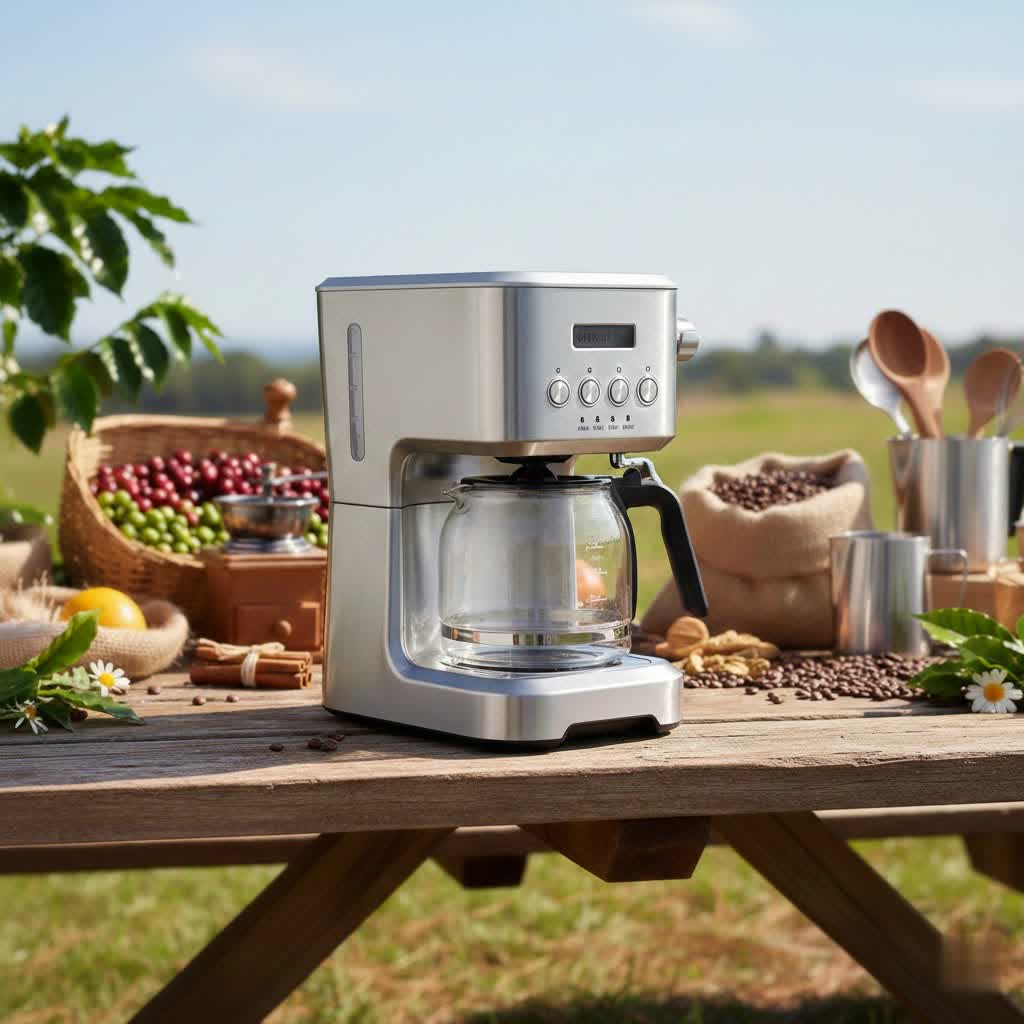
Waking up to the inviting aroma of freshly brewed coffee is a daily ritual for millions, a moment of quiet pleasure before the day truly begins. But with an overwhelming array of brew coffee makers available, how do you choose the one that perfectly suits your taste, lifestyle, and kitchen? From simple drip models to sophisticated espresso machines, understanding the nuances of each can improve your morning routine from merely making coffee to truly crafting an exceptional cup. This comprehensive guide will navigate you through the diverse world of brew coffee makers, helping you make an informed decision and unlock the full potential of your coffee beans.
The World of Coffee Makers: An Overview
A coffee maker, often referred to as a coffeemaker or coffee machine, is a kitchen appliance designed to prepare coffee. At its core, the brewing process involves hot water interacting with ground coffee beans to extract their flavor, oils, and aromas. While the fundamental concept remains consistent, the methods and mechanisms employed by different types of coffee makers vary significantly, leading to distinct beverage profiles.
A Brief History of Coffee Brewing
The journey of coffee brewing has evolved dramatically over centuries. Early methods involved simply boiling coffee grounds in water. The 19th and early 20th centuries saw the rise of percolators and siphon brewers, offering new ways to separate grounds from liquid. However, it was the invention of the automatic drip coffee maker in the mid-20th century that revolutionized home brewing, making coffee preparation accessible and convenient for the masses. Today, innovation continues, bringing forth smart features, precise controls, and diverse brewing styles.
Popular Types of Coffee Makers
The market boasts a wide range of coffee makers, each offering a unique brewing experience and catering to different preferences.
- Drip Coffee Makers: These are perhaps the most common type, working by heating water and then dripping it over a bed of coffee grounds held in a filter, allowing gravity to draw the brewed coffee into a carafe below. They are celebrated for their convenience and ability to brew multiple cups at once.
- Espresso Machines: Designed for those who crave concentrated, rich coffee shots, espresso machines force hot, pressurized water through finely-ground coffee. This category includes manual, semi-automatic, automatic, and super-automatic models, offering varying degrees of user control and automation, often capable of making lattes and cappuccinos.
- French Press: An immersion brewing method, the French press involves steeping coarse coffee grounds in hot water for several minutes before a plunger is pressed down to separate the grounds from the brewed coffee. This method yields a full-bodied, robust cup with some sediment.
- Pour-Over Brewers: This manual method gives the user precise control over water temperature, flow rate, and saturation of the coffee grounds. Hot water is hand-poured in a controlled manner over grounds in a cone-shaped filter, allowing for a clean, nuanced cup. Examples include Chemex and Hario V60.
- Single-Serve Coffee Makers: Popular for their speed and convenience, these machines (like Keurig or Nespresso) use pre-packaged pods or capsules to brew individual servings quickly. They are ideal for busy mornings or households where different preferences exist.
- Cold Brew Makers: Unlike other methods that use hot water, cold brew makers steep coarse coffee grounds in cold water for an extended period (12-24 hours). This process results in a low-acid, naturally sweet coffee concentrate perfect for iced coffee or diluting with water or milk.
- Moka Pot: A stovetop coffee maker that uses steam pressure to push hot water up through coffee grounds, producing a strong, espresso-like coffee, though not true espresso.
- AeroPress: A versatile and portable device, the AeroPress uses total immersion and pressure to brew coffee, resulting in a smooth, rich cup. It’s known for its flexibility in brewing styles, from concentrated shots to Americano-style coffee.
Factors to Consider When Buying a Brew Coffee Maker (Buying Guide)
Choosing the right coffee maker is a personal journey that depends on your individual preferences, habits, and desired coffee experience. Consider these essential factors to guide your decision.
Brewing Method & Personal Preference
|
Our Picks for the Best Coffee Maker in 2026
As an Amazon Associate I earn from qualifying purchases.
|
||
| Num | Product | Action |
|---|---|---|
| 1 | Hamilton Beach 2-Way Programmable Coffee Maker, 12 Cup Glass Carafe And Single Serve Coffee Maker, Black with Stainless Steel Accents, 49980RG |

|
| 2 | Keurig K-Express Single Serve Coffee Maker – Strong Brew Option, 42oz Reservoir, Sleek Design for Holiday Hosting & Gifting, Black |
|
| 3 | ALPHA LIVING 100 Cups Electric Coffee Urn – Stainless Steel Large Capacity Electric Kettle Percolator Coffee Pot – Ideal Hot Beverage Dispenser for Catering, Hotels, Restaurants –Leak-Proof Tap |
|
| 4 | Keurig K-Classic Single Serve K-Cup Pod Coffee Maker, with 3 Brew Sizes, 48oz Removable Reservoir, Black |
|
| 5 | BLACK+DECKER 12-Cup Digital Coffee Maker, Programmable, Washable Basket Filter, Sneak-A-Cup, Auto Brew, Water Window, Keep Hot Plate, Black |
|
| 6 | BLACK+DECKER CM1160W-1 CM1160W 12-Cup Programmable Coffeemaker, White/Stainless Steel |
|
| 7 | 500ml Coffee Decanter Glass Drip Coffee Maker with Reusable Stainless Steel Filter and Grip for Home or Office |
|
| 8 | Hamilton Beach 2-Way Programmable Coffee Maker, 12 Cup Glass Carafe And Single Serve Coffee Maker, White with Stainless Steel Accents, 49933 |
|
| 9 | Ninja 12-Cup Programmable Coffee Brewer, 2 Brew Styles, Adjustable Warm Plate, 60oz Water Reservoir, Delay Brew - Black/Stainless Steel |
|
| 10 | Keurig K-Classic Single Serve K-Cup Pod Coffee Maker, Rhubarb |
|
Your preferred coffee style is the most crucial factor. Do you enjoy the quick, clean taste of a drip coffee, the rich intensity of espresso, the full body of a French press, or the delicate nuances of a pour-over?
- Drip: Best for convenience and brewing larger batches for multiple people or multiple cups throughout the morning. They are generally straightforward to operate.
- Espresso: Ideal for lovers of strong, concentrated coffee and milk-based drinks like lattes and cappuccinos. Requires a finer grind and more hands-on involvement with semi-automatic models, or minimal effort with super-automatics.
- French Press: Perfect for those who appreciate a bold, full-bodied coffee and don’t mind a longer brewing time and some sediment in their cup.
- Pour-Over: Suited for coffee enthusiasts who enjoy the ritual of brewing and desire precise control to highlight specific flavor notes in their beans.
- Single-Serve: Unbeatable for speed, simplicity, and variety, especially for individuals or small households with diverse coffee tastes. However, they can be more expensive per cup and generate more waste.
- Cold Brew: A must-have for iced coffee drinkers, offering a smooth, less acidic base that can be customized.
Capacity & Serving Size
How much coffee do you need to brew at once? Coffee maker capacities are typically measured in “cups,” but a “cup” often refers to 5-6 ounces, not a standard 8-ounce mug.
- Single-Serve: Brews one cup at a time (6-12 ounces).
- Small (2-5 cups): Suitable for individuals or couples who drink one or two cups.
- Medium (8-10 cups): Good for small families or entertaining a few guests.
- Large (12-14 cups): Best for larger families, offices, or frequent entertaining.
Consider models with “single-serve” options if you sometimes need a full pot and other times just a quick individual cup.
Key Features & Technology
Modern coffee makers come with a variety of features that enhance convenience and customization.
- Programmable Settings: A timer allows you to set your coffee to brew automatically, waking up to a fresh pot. Auto shut-off features add safety and energy efficiency.
- Brew Strength Control: Many drip and single-serve machines offer settings for mild, regular, or bold coffee, allowing you to tailor the intensity.
- Water Temperature Control: Crucial for optimal flavor extraction, water should ideally be between 195°F and 205°F (90.5°C to 96.1°C). Some high-end drip brewers are Specialty Coffee Association (SCA) certified, ensuring they meet these temperature standards.
- Built-in Grinder: For ultimate freshness, some machines integrate a grinder. This saves counter space but can increase the overall cost and complexity of cleaning. A burr grinder is preferred over a blade grinder for a more consistent grind.
- Carafe Type:
- Glass Carafe with Warming Plate: Keeps coffee hot but can “cook” the coffee over time, leading to a burnt taste.
- Thermal Carafe: Insulated to keep coffee hot for hours without continuous heat, preserving flavor.
- Milk Frother: Essential for espresso lovers to create lattes and cappuccinos. Some machines have integrated automatic frothers, while others have manual steam wands.
- Water Filter: Some machines include a charcoal water filter to improve water quality and, consequently, coffee taste.
Brand Reputation & Price Point
Reputable brands often guarantee quality, durability, and better customer support. Brands like Technivorm Moccamaster, Breville, OXO, Cuisinart, and Fellow are known for producing reliable coffee makers across various price ranges. While budget options are available, investing a bit more often translates to better performance, longevity, and a superior brewing experience.
Ease of Use & Cleaning
Consider how straightforward the machine is to operate daily and how easy it is to clean. Look for:
- Intuitive Controls: Simple buttons or clear digital interfaces.
- Removable Parts: Detachable water reservoirs, filter baskets, and drip trays simplify cleaning.
- Descaling Indicators: Some machines will alert you when it’s time to descale to remove mineral buildup, which is vital for performance and lifespan.
A coffee maker that is difficult to use or clean might end up gathering dust rather than brewing your favorite beverage.
Comparing Popular Brew Coffee Makers
Here’s a simplified comparison of common brew coffee maker types:
| Feature | Drip Coffee Maker | Espresso Machine | French Press | Pour-Over | Single-Serve |
|---|---|---|---|---|---|
| Brewing Method | Gravity-fed hot water through grounds | Pressurized hot water through finely ground coffee | Immersion of coarse grounds in hot water | Manual hot water pour over grounds | Pod-based hot water through pre-ground coffee |
| Coffee Type | Standard brewed coffee | Espresso, lattes, cappuccinos | Bold, full-bodied coffee | Clean, nuanced coffee | Variety of coffee, tea, hot chocolate |
| Brew Time | 5-10 minutes (for a full pot) | 20-30 seconds (per shot) | 4-5 minutes | 3-5 minutes (manual) | 1-2 minutes |
| Grind Size | Medium-coarse | Very fine | Coarse | Medium-fine to medium | Pre-ground (in pods) |
| Control | Limited (strength, timer) | High (manual/semi-auto) to Low (super-auto) | Medium (steeping time) | High (water temp, flow, saturation) | Low (brew size/strength on some models) |
| Cleanup | Easy (filter, carafe) | Moderate to Complex (portafilter, steam wand) | Easy to Moderate (plunger, carafe) | Easy (dripper, carafe) | Easy (discard pod, rinse reservoir) |
| Cost | Low to Mid | Mid to High (very high for super-automatics) | Low | Low (dripper) to Mid (full kit) | Low (machine) to High (per pod cost) |
Top Picks: Best Brew Coffee Makers on the Market Today
Based on performance, features, and user satisfaction, here are a few standout brew coffee makers across different categories:
Fellow Aiden Precision Coffee Maker – The Smart Drip Brewer
The Fellow Aiden redefines drip coffee, offering unparalleled temperature stability and precision for an exceptional cup. Its sleek design and smart features, including bespoke brewing guidance and steam-free brewing, make it a favorite for those who appreciate both aesthetics and performance. The double-walled carafe keeps coffee hot for hours without compromising flavor, distinguishing it from models with heated plates. While its interface might take a little getting used to and construction can feel lighter than some rivals, the consistent quality of the brew makes it a top choice for drip coffee enthusiasts.
Breville Bambino Plus Espresso Machine – Entry-Level Excellence
For aspiring baristas, the Breville Bambino Plus is an outstanding entry-level espresso machine. Despite its compact size, it delivers impressive espresso shots with rich crema and offers groundbreaking automatic milk steaming technology that can produce latte art-worthy microfoam hands-free. While it doesn’t include a built-in grinder (which is recommended for true espresso quality), its rapid heat-up time and auto-purge function ensure consistent performance and easy maintenance. It’s a fantastic choice for those looking to explore the world of espresso without a huge investment or steep learning curve.
OXO Brew 8-Cup Coffee Maker – Reliable & User-Friendly Drip
The OXO Brew 8-Cup Coffee Maker consistently ranks high for its balance of performance and affordability. This SCA-certified machine ensures optimal water temperature (195-205°F) for proper extraction, delivering delicious drip coffee every time. Its thermal carafe keeps coffee hot for extended periods without a burnt taste, and the ability to brew a single cup directly into a mug adds to its versatility. Known for its user-friendly design and simple operation, the OXO Brew 8-Cup is a robust option for anyone seeking reliable, high-quality drip coffee.
Mastering Your Brew: Usage and Maintenance Tips
To ensure your brew coffee maker consistently delivers the best possible coffee and stands the test of time, follow these essential usage and maintenance guidelines.
Optimal Coffee-to-Water Ratio
The general rule of thumb, often referred to as the “golden ratio,” is to use 2 tablespoons (about 10 grams) of coffee grounds for every 6 ounces (180 ml) of water. This ratio can be adjusted to your personal taste, making it weaker or stronger as desired. It’s often better to brew slightly stronger and dilute with hot water than to have a weak, undrinkable cup.
Grind Size Matters
The correct grind size is paramount for proper extraction and depends entirely on your brewing method:
- Coarse: French Press, Cold Brew
- Medium-Coarse: Drip Coffee Makers (especially flat-bottom filters)
- Medium-Fine: Pour-Over (like cone filters)
- Very Fine: Espresso Machines
Using freshly ground beans significantly impacts flavor. Invest in a good quality burr grinder, as it provides a more uniform grind than blade grinders, leading to better and more consistent extraction.
Water Quality and Temperature
Since coffee is 98% water, the quality of your water directly affects your coffee’s taste. Always use fresh, cold, filtered water. Distilled water is not recommended as it lacks minerals necessary for optimal flavor extraction. As mentioned, the ideal brewing temperature for hot coffee is between 195°F and 205°F (90.5°C to 96.1°C); water that is too hot can scald the coffee, resulting in bitterness, while water that is too cool leads to under-extraction and a sour taste.
Regular Cleaning and Descaling
To prevent oil buildup and mineral deposits that can taint your coffee’s flavor and damage your machine, regular cleaning is crucial.
- Daily: Rinse the carafe, filter basket, and any removable parts with warm, soapy water.
- Weekly: Wipe down the exterior of your machine.
- Monthly/Bi-Monthly (or as needed): Descale your coffee maker. This involves running a mixture of white vinegar and water (or a commercial descaling solution) through the machine’s brew cycle, followed by several cycles of clean water. The frequency depends on your water hardness and how often you use the machine, typically every 1-3 months.
Troubleshooting Common Issues
- Weak Coffee: Check your coffee-to-water ratio, ensure your grind size isn’t too coarse for your method, or verify that your water temperature is hot enough.
- Bitter Coffee: Your water might be too hot, your grind too fine, or the coffee was over-extracted (e.g., steeped too long in a French press). An unclean machine can also contribute to bitterness.
- Slow Brewing: This often points to mineral buildup requiring descaling, or a grind that is too fine, clogging the filter.
By paying attention to these details, you can significantly enhance your home brewing experience.
The journey to finding your perfect brew coffee maker is an exciting one, full of possibilities. Whether you prioritize convenience, precision, or the ritual of manual brewing, there’s a machine designed to meet your needs. By understanding the different types, considering essential buying factors, and practicing good usage and maintenance habits, you’re well on your way to enjoying delicious, expertly crafted coffee every single day. So, what kind of coffee adventure will you embark on next?
Frequently Asked Questions
What is the ideal water temperature for brewing coffee?
The ideal water temperature for brewing coffee ranges from 195°F to 205°F (90.5°C to 96.1°C). This temperature range ensures optimal extraction of flavors without burning the coffee or resulting in under-extraction. Many high-quality drip coffee makers are designed to maintain this specific temperature throughout the brewing cycle.
How much coffee ground should I use per cup?
A widely accepted guideline is to use approximately 2 tablespoons (about 10 grams) of coffee grounds for every 6 ounces (180 ml) of water. However, this ratio can be adjusted based on your personal preference for a weaker or stronger brew. Always start with this recommendation and fine-tune it to your taste.
How often should I clean and descale my brew coffee maker?
Daily rinsing of removable parts with soap and water is recommended. For a deeper clean, descaling should typically be done every 1 to 3 months, depending on the hardness of your water and how frequently you use your machine. Regular descaling prevents mineral buildup, which can affect taste and machine performance.
Can I use any type of coffee in any coffee maker?
While most coffee makers can technically use various coffee types, the best results come from matching the coffee grind size to the brewing method. For instance, espresso machines require a very fine grind, while French presses need a coarse grind. Using the wrong grind size can lead to poor extraction and a less enjoyable cup.
What is the difference between a thermal carafe and a glass carafe with a warming plate?
A thermal carafe is insulated to keep coffee hot for several hours without additional heat, preserving the coffee’s flavor. A glass carafe typically sits on a warming plate, which keeps the coffee hot but can “cook” it over time, potentially leading to a burnt or bitter taste if left on for too long.
Get our weekly buyer guide
Practical specs, not advice. Unsubscribe anytime.

This guide really helped me understand why my old coffee always tasted a bit bitter. I realized I was using too fine a grind for my French press. Adjusting that, along with paying more attention to water temperature, has made a huge difference. My coffee is much smoother now, and I’m actually enjoying my morning ritual even more.
I was hoping to find a good espresso machine recommendation in the mid-range price point, but most of the options felt a bit out of my budget. The guide was helpful for understanding the different features, but I’m still on the hunt for something that won’t break the bank. It’s a solid overview, just not quite what I needed for my specific situation.
I’ve always been intimidated by the idea of an espresso machine, but the breakdown of how they work made it seem much more approachable. I ended up getting one of the recommended semi-automatic models, and I’m loving it! It’s amazing to be able to make lattes at home that taste just as good as my favorite coffee shop. My kitchen smells fantastic every morning.
I’ve been using a basic drip coffee maker for years, but after reading about the different types, I decided to upgrade to a pour-over system. The difference in flavor is incredible! My morning cup now feels like a true craft, and I’m really enjoying experimenting with different beans. It’s definitely worth the extra effort for a superior brew.